
Harmful Boards vs. High Performing Boards
I just got my 1st portfolio exit! Yeah! But I am actually losing money. Here is why.

We just came back from Visionary Board Program in Porto 🌞!
33 participants, speakers, board members, investors, C-level executives coming from Europe to elevate their board skills, learn from each other´s experiences and build a long lasting network.


One of the of many topics we covered:
What separates a great board from a destructive one?
Most people assume boards exist to protect companies.
Unfortunately, that is not always true.
Some boards accelerate growth, open doors, support management, attract investors, and help founders navigate difficult decisions.
Others create friction, pursue personal agendas, block fundraising, destroy trust, and ultimately reduce company value.
The difference is rarely lack of competence.
It is often character, incentives, and behavior.
The First Job of a Board
A board does not exist to serve itself.
A board exists to serve the long-term success of the company and all shareholders.
That sounds obvious.
Yet many boards forget this simple principle.
When board members start optimizing for their own interests rather than the company’s interests, problems begin. Slowly at first. Then all at once.
The Red Flags of a Bad Board
1. Personal Interests Come Before Company Interests
One of the most common mistakes occurs during fundraising.
Imagine a company needs capital to survive and grow.
The company must raise at a lower valuation than some board members would like.
They push for a higher valuation. Because they want the value of their shares to increase. But this can make the fundraising difficult and the exit.
Their focus becomes: “What happens to my ownership in the short term?”
That´s GREED.
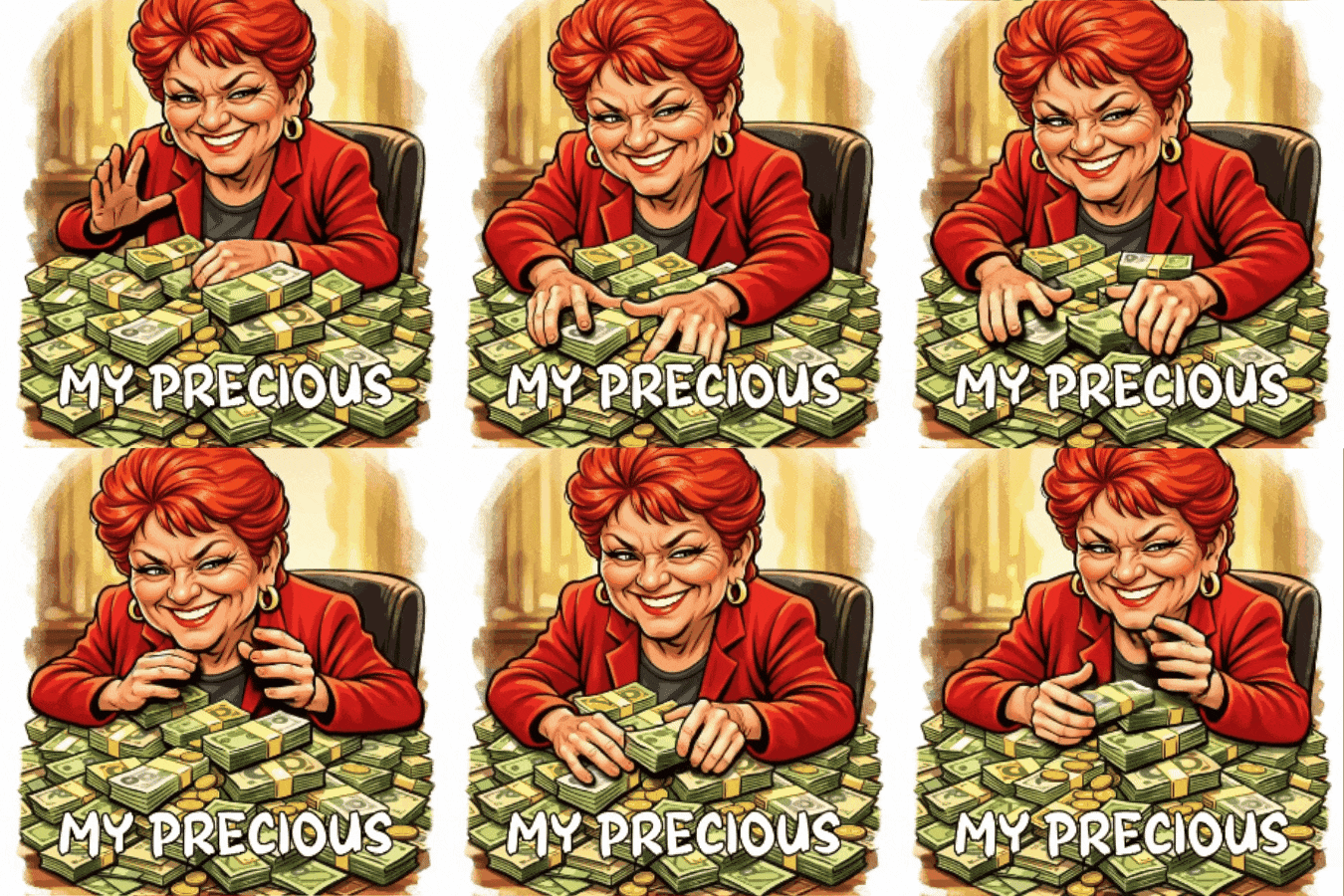
Instead of: “What gives the company the highest chance of fundraising and success?”
The result? A company that could have secured growth capital suddenly faces a much bigger risk: Low or no investment. No runway. No future.
I just had my first portfolio exit! I was excited! Then I checked the exit price per share. I bought the shares at €4 per share. Six years later, I am selling them at €3.80 per share. I actually lost money. I’m not even getting back what I originally invested.
How is that possible?
Because the company’s valuation kept increasing on paper over the years, driven by investors and the board. But when it came time for an actual acquisition, the buyer offered a price below the paper valuation. A reminder that valuations are opinions.
Exits are reality. As investors, it’s easy to get excited by rising valuations and funding rounds. But until someone is willing to buy the company, those numbers are just numbers.
2. Board Membership Becomes an Ego Project

Some individuals join boards because they want to contribute.
Others join because they want the title. The LinkedIn headline. The prestige. The visibility.
When board meetings also become opportunities to demonstrate intelligence rather than solve problems, value creation suffers.
The boardroom and wherever they get involved becomes a stage instead of a workplace.
3. Board Members Use the Company for Their Own Benefit
This is one of the most serious conflicts of interest.
Examples include:
Using company relationships to generate private consulting opportunities.
Approaching company clients for personal business.
Promoting their own services to the clients acquired by the company.
Prioritizing deals and connections that benefit them personally.
Using confidential information for personal gain.
Watch out it happens more than we think, and it often happens behind closed doors.
4. Lack of Respect and Trust
A dysfunctional board often displays subtle signs:
Constant second-guessing of management.
Political alliances inside the board.
Side conversations outside official meetings.
Hidden agendas.
Information being withheld.
Public criticism instead of constructive feedback.
Disrespect towards the management.
The company pays the price.
5. Focus on Control Instead of Value Creation
Bad boards spend excessive time discussing:
Reporting formats.
Minor operational details.
Internal politics.
Personal influence.
Good boards spend their time discussing:
Strategy.
Growth.
Risks.
Talent.
Capital allocation.
Competitive advantage.
The difference is significant. One manages the past. The other builds the future.
What Great Boards Do Differently
1. They Put the Company First
Great board members understand their responsibility. Their role is not to protect their ego, ownership percentage, or personal interests.
Their role is to help the company become more valuable over time.
Their role is to serve, not to sit!
They role is the serve the founding team first, especially when it comes to startups and scale ups.
2. They Challenge and Support
The best boards do not blindly agree with management.
But they do not constantly undermine management either.
They ask questions. They challenge assumptions. They provide alternative perspectives. They offer help. They roll up their sleeves.
And once a decision is made, they support execution.
3. They Open Doors
A strong board is a force multiplier.
Board members actively help with:
Partnerships.
Customers.
Investors.
Recruitment.
Strategic introductions.
They do not simply attend meetings. They create opportunities actively.
4. They Build Trust
The best boardrooms are built on trust. People can disagree openly. Management can share bad news early.
Board members can challenge ideas without attacking people.
Difficult conversations happen faster. Better decisions follow.
5. They Think Long Term
Great boards understand that value creation takes time, years!
They avoid emotional reactions. They avoid political games. They avoid short-term optimization.
Instead, they focus on building companies that can thrive for years, not quarters.
MY Personal Experiences
I sit on boards and advise CEOs. I have seen behaviors that destroy value, trust, and momentum.
Board members and investors pushing for higher valuations to protect their own interests, with little consideration for the founder who will later have to raise capital at that valuation.
Board members who promise introductions, feedback, or document reviews, and never deliver.
Board members who build relationships with clients, partners, or investors behind the founder’s back to advance their own interests.
And the list goes on.
Many CEOs spend enormous amounts of energy managing dysfunctional board members instead of building their company.
I am often brought in to help clean up the mess. I coach CEOs through difficult conversations, help realign boards around the company’s goals, and support the CEO in setting stronger boundaries.
My advice? Address dysfunction immediately. And give no second chances.
The moment you see behavior that is not aligned with the company’s interests, deal with it. Do not normalize it. Do not hope it will fix itself.
What you tolerate becomes the standard for everyone else around the table.
If a board member consistently acts against the interests of the company, start planning their exit from the board.
A dysfunctional board drains energy, creates distractions, and slows down execution.
Remove toxicity as soon as possible.
Easier said than done.
If you are facing challenges with your board, feel free to reach out 📞 → 30 min call here.
Our next Visionary Board & Leadership Training will take place on March 4 to 6, 2027.
Participants from the Nordics, DACH, and Benelux already secured their spots. Spots are limited to around 30 to ensure great dynamics and tailored guidance.
If you would like to strengthen your governance skills, build your network with peers, learn how to land your next board position, navigate crisis and complex board dynamics, visit our website www.thevisionaryboard.com, feel free to: book a call with me 📞 → 30 min call here.
📸from our Program in Porto this week!


Looking forward to supporting you.
Raja Skogland 🌱
More articles


